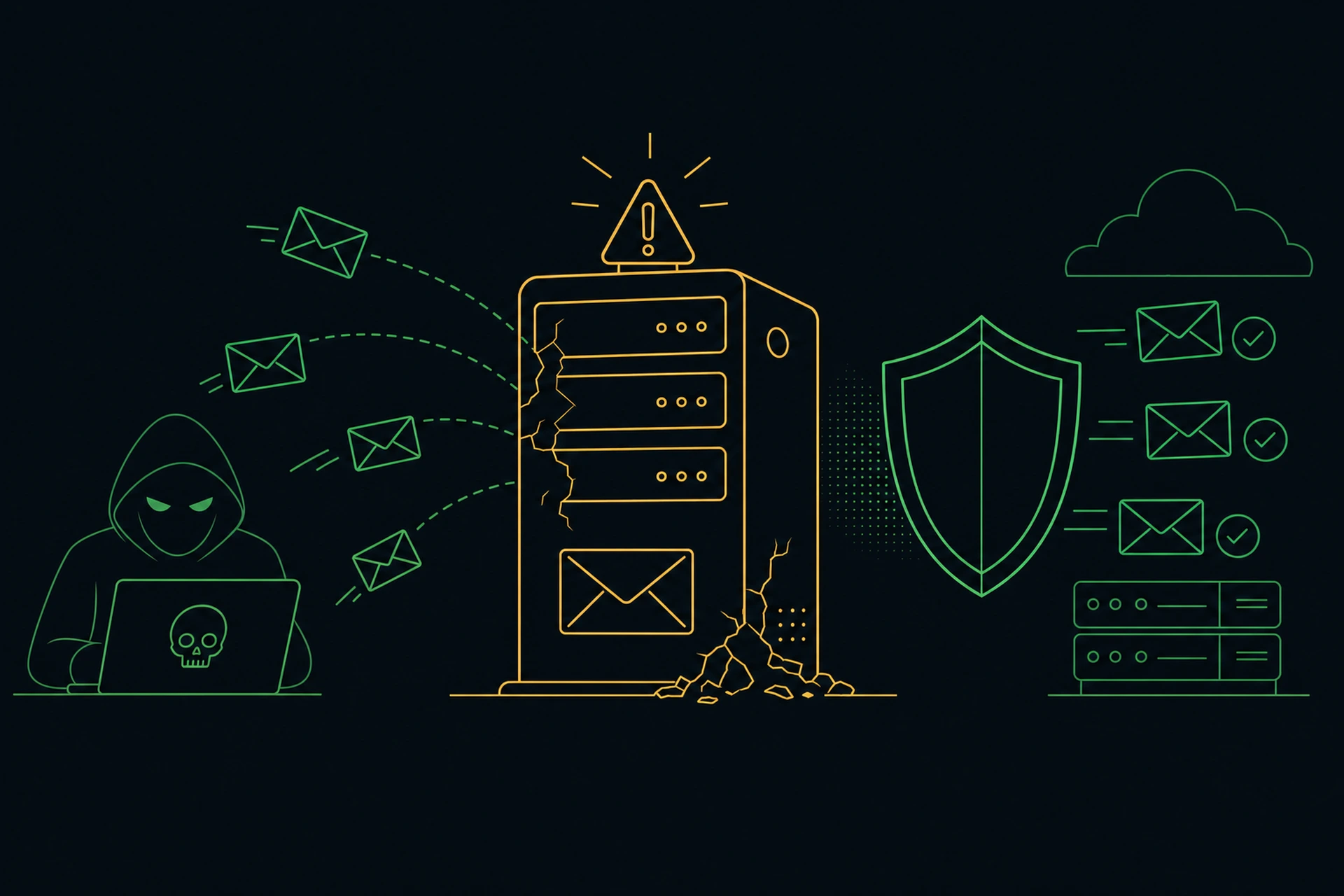
Spammers don't hack their way into most of the servers they abuse. They just find the ones left with the door wide open. A misconfigured mail server is one of the easiest targets on the internet, and once spammers find it, they'll use it until it's burned to the ground, along with your domain's reputation.
If you run any kind of mail service, understanding why these misconfigurations happen, and how to close them, is one of the most valuable things you can do for your email spam prevention strategy. Let's break down exactly what spammers look for and how to make sure your server isn't on the menu.
What Makes a Mail Server "Misconfigured" in the First Place
A misconfigured mail server usually has one of a few problems. It might allow anyone, anywhere, to relay email through it without authentication. It might be missing the DNS records that verify who's allowed to send mail on behalf of your domain. Or it might simply have weak or default credentials that are trivial to guess.
None of these are exotic vulnerabilities. They're basic setup mistakes, often made years ago and never revisited. That's exactly why they're so common, and why spammers actively scan the internet looking for them.
Open Relays: The Classic Mistake
An open relay is a mail server that accepts and forwards email from anyone, not just your own users. Back in the early internet, this was a normal default. Today, it's basically an invitation for abuse.
Once spammers find an open relay, they'll pump thousands of spam messages through it, using your server's IP address and reputation to do it. You won't necessarily notice right away. You'll notice when your domain gets blacklisted and your legitimate emails start bouncing.
Email Spam Prevention Starts With Authentication Records
The single biggest thing you can do for effective email spam prevention is set up your authentication records correctly: SPF, DKIM, and DMARC. These three records work together to tell receiving mail servers, in a way they can verify, that a message actually came from your domain.
- SPF lists which servers are allowed to send mail for your domain.
- DKIM adds a cryptographic signature so receivers can confirm the message wasn't altered in transit.
- DMARC tells receiving servers what to do if a message fails SPF or DKIM checks, and lets you get reports when someone tries to spoof your domain.
Without these records, anyone can send email that looks like it's from your domain. Spammers exploit this constantly, and it's not just a threat to your inbox. It damages your reputation with the people who receive the fake messages. We've gone deeper into these mechanics in Why Your Emails Land in Spam and What Email Deliverability Actually Means.
Set a Real DMARC Policy, Not Just a Record
A lot of domains have a DMARC record, but it's set to "none," which just monitors and does nothing to stop abuse. If you're serious about email spam prevention, move your policy toward "quarantine" or eventually "reject" once you've confirmed your legitimate mail sources are all passing authentication. That's the setting that actually tells receiving servers to block spoofed mail instead of just reporting on it.
Weak Credentials Are Still a Huge Problem
Beyond open relays, plenty of mail servers get compromised through simple credential stuffing. Someone reuses a password, or picks something weak, and an attacker guesses their way in. Once inside a real mailbox, spammers have something even better than an open relay: a legitimate, authenticated account they can send from.
This is why enforcing strong passwords and, wherever possible, two-factor authentication on mailboxes matters so much. It's the same principle we've talked about for admin panels in WordPress Login Security: Simple Changes That Stop the Majority of Brute Force Attempts. The login screen is the login screen, whether it's your website or your inbox.
Rate Limiting and Sending Limits
Even a server with strong authentication can be quietly abused if there's no cap on how fast or how many messages a single account can send. Legitimate users rarely need to send thousands of emails in a few minutes. Spammers do. Setting sensible sending limits per account, and alerting when they're exceeded, catches compromised accounts before they do serious damage to your reputation.
Why This Matters Beyond Just Getting Blacklisted
The direct cost of a misconfigured server is obvious: your domain ends up on spam blacklists, and your real emails stop reaching real people. But there's a slower cost too. Every blacklist incident chips away at your sender reputation, and that reputation takes a long time to rebuild. We've covered how that reputation system works in How Sender Reputation Works and Why It Is the Foundation of Email Deliverability.
If you're running your own mail server, this is worth an audit today, not next quarter. Check for open relay settings, confirm your SPF, DKIM, and DMARC records are actually correct (not just present), and review who has access to send mail through your system.
Managed Hosting Takes This Off Your Plate
If maintaining all of this sounds like a part-time job you didn't sign up for, that's a fair reaction. It genuinely takes ongoing attention. This is one of the reasons good managed hosting, ours included, configures mail authentication correctly from the start and keeps an eye on server settings that could otherwise turn into an open door for spammers. You get the sending capability without needing to become a mail server administrator yourself. You can read more about how we approach this on our email hosting page.
The Takeaway
Spammers don't need to be clever when server owners leave the basics undone. Close the open relay, get your authentication records right, lock down credentials, and set sensible sending limits. Do those four things and you've eliminated the vast majority of what makes a mail server an attractive target. It's not glamorous work, but it's the kind of work that keeps your emails landing in inboxes instead of getting your domain flagged as the source of someone else's spam campaign.