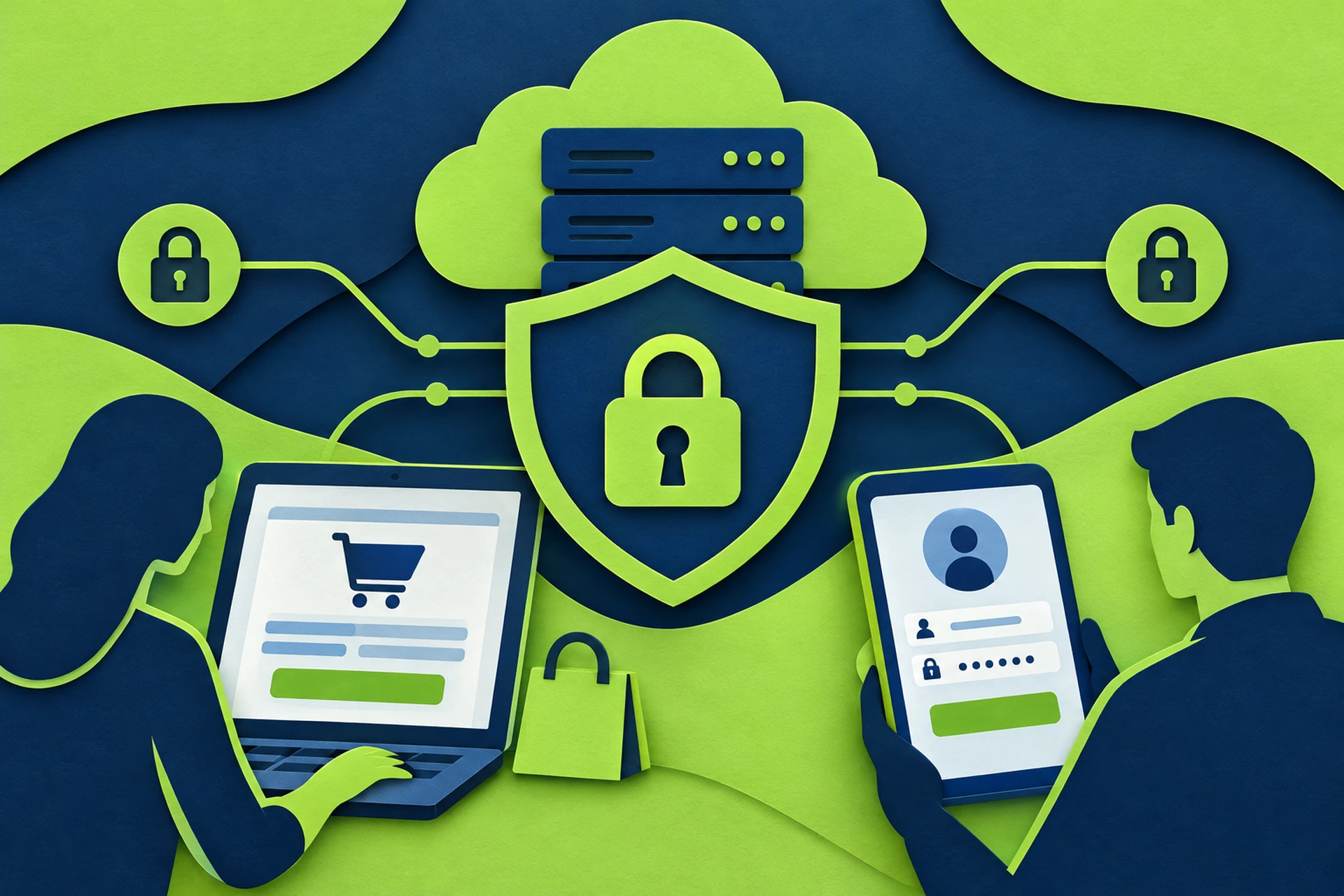
Every time someone types a password or a credit card number into your site, that data has to travel somewhere. Without the right protection, it travels in plain text, readable by anyone sitting between your visitor and your server. This is exactly why SSL certificate hosting matters so much during checkout and login, the two moments when your site handles the most sensitive information it will ever touch.
Let's break down what's actually happening during these moments, and why the hosting side of SSL certificate hosting is just as important as having a certificate at all.
What Happens During Checkout and Login Without Encryption
When a visitor submits a login form or a payment page, that data gets packaged into an HTTP request and sent to your server. If the connection isn't encrypted, that request travels as readable text across every network hop between the browser and your server, including public WiFi routers, ISPs, and anything else along the way.
An attacker running a packet sniffer on the same network, say a coffee shop WiFi, can grab that request and read it directly. Usernames, passwords, card numbers, billing addresses. All of it sits in plain view.
SSL (technically TLS now, though everyone still says SSL) wraps that same data in encryption before it leaves the browser. Even if someone intercepts the traffic, all they see is scrambled text they can't use.
Why Checkout Pages Are a Bigger Target Than You Think
Checkout pages attract more than just legitimate customers. Automated bots scan the web constantly, looking for payment forms without valid certificates. Some attackers specifically target ecommerce sites running outdated or expired SSL setups because they know the data moving through those forms has resale value.
Login pages carry similar risk. Credential theft is one of the most common entry points for larger account takeover schemes, and an unencrypted login form hands attackers everything they need with almost no effort.
Why SSL Certificate Hosting Is About More Than Just Installing a Certificate
Buying an SSL certificate is the easy part. The harder part, and the part that actually determines whether your checkout and login pages stay protected, is how that certificate is managed over time.
Certificates expire. Configurations need updating as encryption standards evolve. Mixed content warnings pop up when even one image or script loads over plain HTTP on an otherwise secure page. Any of these issues can quietly break the protection your customers think they have.
This is where the hosting environment matters. A good managed host keeps certificates renewed automatically, checks that every page (not just the homepage) is served securely, and makes sure your TLS configuration keeps up with current standards like TLS 1.3. We handle all of this automatically for the sites we host, so certificate expiration never becomes the reason a checkout page suddenly shows a browser warning.
The Padlock Isn't the Whole Story
Customers look for the padlock icon and assume everything is fine. But a valid certificate only guarantees encryption, not that the certificate is configured correctly or that every element on the page is loading securely. A checkout page can show a padlock while still leaking data through a misconfigured subdomain or an old cipher suite that modern browsers no longer trust.
We covered the deeper mechanics of this in Why SSL Certificate Hosting Matters More Than Just Showing a Padlock in the Browser, and if you're deciding between certificate types for your checkout flow, DV vs OV vs EV SSL Certificates walks through which level of validation makes sense for sites handling payment data.
What Good Checkout and Login Security Actually Requires
Encryption in transit is the foundation, but it's not the entire picture. A checkout or login page that's genuinely protected needs a few things working together:
- Valid, properly configured TLS on every page, not just the ones with forms
- HSTS (HTTP Strict Transport Security) so browsers refuse to load the page over plain HTTP, even if someone types the wrong URL
- No mixed content, meaning every script, image, and resource on the page also loads securely
- Automatic certificate renewal so there's never a gap where the site silently falls back to an invalid or expired certificate
- A compliant PCI setup if you're processing card payments directly, which includes proper encryption standards as a baseline requirement
Miss any one of these and the encryption story has a hole in it, even if the certificate itself looks fine.
Renewal Failures Are More Common Than You'd Expect
One of the quietest ways checkout security breaks down is a missed certificate renewal. Certificates typically last 90 days to a year, and it's easy for a manual renewal to slip through the cracks, especially on sites managed by multiple people. When that happens, browsers throw a loud warning telling visitors the connection isn't private, which tanks trust and conversions instantly. We wrote about how this plays out in How SSL Certificate Renewal Failures Silently Destroy Trust and Traffic, and it's worth a read if you've ever wondered why a certificate expired without anyone noticing.
Encryption Alone Isn't Enough
SSL certificate hosting protects data in transit, but it doesn't protect your server from being compromised, or stop someone from brute-forcing their way into a login form. That's a separate layer of defense, usually involving a firewall and rate limiting on login attempts. A web application firewall can catch credential stuffing attempts before they succeed, and proper SSL management at the hosting level makes sure the encryption itself never becomes the weak link.
The Takeaway
Your customers trust you with their passwords and payment details the moment they hit submit on your checkout or login page. That trust depends on encryption that's actually working, not just present. Check that your certificate is valid across your entire site, that renewals happen automatically, and that nothing on your checkout page is quietly loading over an insecure connection. If your hosting provider handles all of this without you having to think about it, that's one less thing standing between your customers and a bad day.