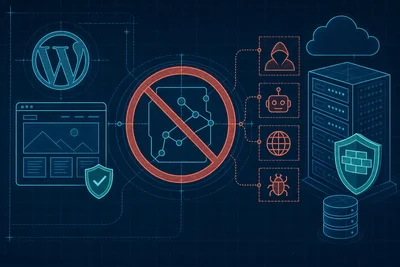
If you installed WordPress with the default settings, your database tables almost certainly start with wp_. That's not a bug, it's just the default. But it also means every automated attack script out there already knows exactly what your tables are called. Changing that prefix is a small step that quietly removes one easy target from your site.
It won't stop a determined attacker on its own. But security isn't about one magic fix. It's about stacking small barriers until the effort required to break in outweighs the reward. This is one of those barriers.
What the Table Prefix Actually Does
Every WordPress site stores its data in a MySQL database, split across tables like wp_posts, wp_users, and wp_options. The prefix is just the label attached to the front of each table name. WordPress lets you set this during installation, or change it later if you're working with an existing site.
Because wp_ is the out-of-the-box default, it's the first thing many SQL injection scripts try. Some attacks are written specifically to guess table names, and they start with the most common one. If your prefix is something unpredictable, those blind, automated attempts fail before they even get started.
Why This Matters More Than You'd Think
SQL injection attacks work by sneaking malicious queries into form fields, URL parameters, or other inputs, hoping the site will execute them against the database. A lot of these attacks are not tailored to your specific site. They're generic scripts fired at thousands of WordPress installs at once, and they usually assume the default prefix.
Changing your prefix doesn't patch a vulnerability in your code. What it does is break the assumptions built into these mass-produced attack scripts. It's the digital equivalent of moving your spare key from under the doormat, which is exactly where every burglar checks first.
How to Change Your Table Prefix Safely
If you're setting up a fresh WordPress install, this is easy. During installation, you'll see a field for the table prefix. Replace wp_ with something random, like wp7x2_ or a string unique to your site. Done.
Changing the prefix on a live, already-running site is trickier because you have to update it in two places consistently:
- Every table name in the database itself
- The $table_prefix variable in your wp-config.php file
- Any serialized data or plugin references that hardcode the old prefix
Here's the general process if you're doing it manually:
- Take a full backup before touching anything. This step is non-negotiable.
- Rename each table in phpMyAdmin (or via SQL commands) from wp_tablename to newprefix_tablename.
- Update the wp_options table where option_name begins with the old prefix.
- Update the wp_usermeta table where meta_key begins with the old prefix.
- Edit wp-config.php to reflect the new $table_prefix value.
- Clear any caching and test the site thoroughly, checking the front end, admin login, and plugin functionality.
This is exactly the kind of task where a mistake in one SQL statement can take your whole site down, so a lot of site owners understandably avoid doing it by hand. Plugins like Change DB Prefix or iThemes Security can automate this safely, running the renaming and reference updates for you in a few clicks.
If you're on a host that gives you database tools built into the panel, you can also use a search-and-replace utility to hunt down and update any leftover references to the old prefix across your database, which is often the step people forget and the reason a prefix change breaks a site.
What This Doesn't Protect Against
It's worth being honest about the limits here. Changing your table prefix does nothing against:
- Weak passwords or credential stuffing attacks
- Outdated plugins with known vulnerabilities
- Phishing attempts targeting your admin account
- A competently targeted, manual attack where someone is actually looking at your specific site
Think of it as removing low-hanging fruit, not building a wall. It works best alongside other habits, like keeping software updated, using strong unique passwords, and enabling two-factor authentication on your WordPress login. We've also covered other quick wins in why most sites should disable XML-RPC, which follows the same logic: remove default targets that automated attacks rely on.
A Word on Backups Before You Touch the Database
Any time you're editing database tables directly, there's a real risk of breaking something, even with a plugin doing the heavy lifting. Before you start, make sure you have a recent, restorable backup. If something goes wrong mid-process, you want to be able to roll back in minutes, not spend a stressful afternoon trying to reverse-engineer what happened. A managed host that runs automatic backups in the background gives you that safety net without extra effort. See how automated backups and restores work if you want a refresher on what a good backup setup should include.
Where This Fits Into Your Broader Security Routine
Changing your table prefix is a "set it and mostly forget it" task. Do it once, verify it worked, and move on. It pairs naturally with a periodic review of your other security settings, like login protections, plugin updates, and file permissions. If you haven't done a full pass in a while, our quarterly WordPress security checklist is a good place to structure that review.
On a managed hosting environment, some of this database-level maintenance can be handled through built-in tools rather than manual SQL editing, which reduces the chance of a typo taking your site offline. Either way, the underlying principle stays the same: small, deliberate changes to your setup make automated attacks bounce off your site instead of finding an easy way in.
Takeaway
Changing your WordPress table prefix takes maybe twenty minutes and a solid backup. It won't stop every attacker, but it will quietly filter out a huge share of the automated noise hitting WordPress sites every day. Combined with other WordPress security best practices, like strong authentication and regular updates, it's one more layer that makes your site a less appealing target.