You've probably seen the price difference and wondered what you're actually paying for. Unmanaged VPS plans start at a few dollars a month. Managed web hosting plans cost more — sometimes significantly more. So is that gap justified, or are you just paying for a fancier label?
The honest answer: it depends entirely on what your time is worth and what you're trying to build. But to make that call, you need to understand what managed hosting actually covers — and what it doesn't.
What Managed Web Hosting Actually Means
When a hosting plan is described as "managed," it means the provider takes responsibility for the server's ongoing operation — not just giving you a box and walking away.
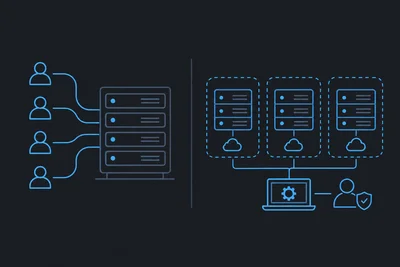
On an unmanaged server, you handle everything yourself: installing software, applying security patches, configuring firewalls, troubleshooting performance issues, and recovering from failures. If something breaks at 2am, you're the one fixing it.
With managed web hosting, your provider handles that layer. You focus on your website and your business. They focus on making sure the underlying infrastructure stays secure, updated, and running.
That said, "managed" isn't a strictly defined term. Different providers include different things. Before you pay a premium, it's worth knowing exactly what's in scope.
What Should Be Included — and What to Watch Out For
The best managed hosting plans cover:
- Server setup and configuration — You shouldn't need to install a web server, configure PHP versions, or set up a database engine from scratch.
- Security patching and OS updates — Kernel updates, software vulnerabilities, and security patches should happen automatically, without you scheduling them.
- Automatic backups — Daily backups at minimum, stored somewhere separate from your live server. Some providers let you increase backup frequency if you need tighter recovery windows — we run up to four automatic backups per day for clients who need that level of protection.
- Monitoring and uptime alerts — If your server goes down, your provider should know before you do.
- Security layers — A web application firewall and DDoS mitigation should be standard, not add-ons.
- Support that actually understands your server — Not a generic help desk reading from a script, but someone who can actually log in and diagnose a problem.
What to watch out for: some companies call themselves "managed" but only mean they handle the initial server setup. After that, you're largely on your own. Read the fine print.
The Real Cost of Doing It Yourself
This is where the math gets interesting.
Suppose you run a business website on an unmanaged VPS at $20/month. Sounds great. But then consider:
- How many hours per month do you spend on server maintenance?
- What does a security breach cost — in cleanup, lost revenue, and reputation damage?
- What's the cost of a few hours of downtime during your busiest period?
- If you're a developer, what's your hourly rate? Are server admin tasks really the best use of that time?
For many businesses, the "cheaper" unmanaged route ends up being significantly more expensive once you account for time, risk, and the occasional crisis. The hidden costs of cheap hosting have a way of adding up faster than most people expect.
Agencies especially feel this. Managing five client servers manually is manageable. Managing twenty becomes a part-time job.
Who Gets the Most Value From Managed Web Hosting
Business Owners Without a Technical Team
If you're running a company and your website is critical to revenue, you need someone accountable for keeping it up and secure. You probably don't want to become a server administrator. Managed hosting lets you outsource that responsibility to people who do it full time.
Developers and Freelancers
Your value is in building things, not babysitting infrastructure. Managed web hosting lets you focus on development work. Features like staging environments — where you can test changes safely before pushing them live — are often built into managed plans and save enormous amounts of time. Being able to promote a staging site to production in a single action, without manual file transfers or DNS headaches, is exactly the kind of thing that compounds into real time savings over a year.
Growing E-commerce Sites
A store going offline during a sale isn't just annoying — it's directly measurable lost revenue. Managed hosting gives you proactive monitoring and faster response times when something goes wrong, which matters a lot when every minute counts.
Is the Extra Cost Worth It?
Let's be direct: managed web hosting costs more because it delivers more. The question isn't whether the price difference is real — it is. The question is whether the value matches your situation.
If you run a personal project and enjoy tinkering with servers, unmanaged might be the right fit. If you're running a business, managing client sites, or simply want to focus on your work rather than your infrastructure, managed hosting almost always pays for itself.
The right way to think about it: you're not paying for a more expensive server. You're paying to have a team of people responsible for that server, so you don't have to be.
Questions to Ask Before You Sign Up
Not all managed hosting is equal. Here's what to ask any provider before committing:
- What exactly do you handle, and what am I responsible for?
- How are security updates applied — automatically, or do I need to approve them?
- How often are backups taken, and where are they stored?
- What happens if my site goes down at midnight on a Sunday?
- Is there a WAF and DDoS protection included, or is that extra?
- What's the support response time, and who am I actually talking to?
A provider who gives clear, specific answers to these questions is worth trusting. Vague answers — or answers that redirect you to documentation — are a warning sign. If you want a broader framework for evaluating providers, what separates a good managed hosting provider from a great one is worth reading before you commit.
The Bottom Line
Managed web hosting exists to solve a real problem: running a server well is genuinely hard, and most website owners have better things to do with their time. The extra cost buys you expertise, accountability, and peace of mind.
If your website matters to your business, the question probably isn't whether you can afford managed hosting. It's whether you can afford not to have it.