One hour doesn't sound like much. You've probably spent longer than that stuck in traffic or waiting on a slow checkout line. But when your website goes dark for sixty minutes, the damage doesn't stop when the server comes back online. It lingers in your rankings, your crawl behavior, and your bottom line long after the page starts loading again.
Let's break down what actually happens during that hour, and why website uptime for SEO matters far more than most site owners realize.
What Googlebot Sees During an Outage
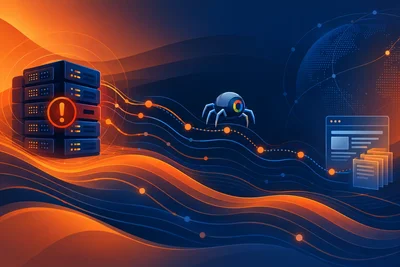
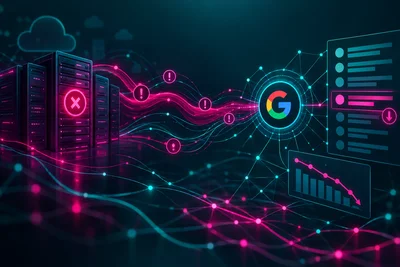
When Googlebot tries to crawl your site during downtime, it gets a connection error or a 5xx response instead of your homepage. Google doesn't panic over one failed request. But if it happens repeatedly, or at a bad moment, it starts to adjust how it treats your domain.
Here's the part people miss: Google doesn't just note the outage and move on. It changes its crawling schedule based on what it learns. A site that fails to respond gets crawled more cautiously going forward, because Googlebot is trying to avoid wasting resources on a server that might not answer.
The Compounding Effect of Bad Timing
If your outage happens right when Googlebot planned a crawl of a freshly updated page, that update doesn't get indexed on schedule. Instead, it waits for the next crawl window, which might be hours or days later depending on your site's crawl frequency. For news sites, ecommerce stores with changing inventory, or anyone relying on fast indexing for website uptime and SEO performance, that delay is a real cost.
- New or updated pages take longer to show up in search results
- Product availability changes don't reflect quickly in shopping results
- Time-sensitive content loses its window of relevance before it's even indexed
We've covered how this plays out over time in How Frequent Downtime Trains Googlebot to Visit Your Site Less and Index It Slower, and it's worth understanding because a single bad hour rarely stays a single bad hour.
The User Trust Problem Nobody Talks About
Search rankings aren't just about crawlability. Google also watches how real visitors behave. If someone clicks your result and lands on an error page, they bounce immediately and often try a different result instead. That pattern, repeated across enough users, sends a signal that your site isn't a reliable answer to the query.
Meanwhile, the visitor who hit your downtime doesn't always come back later to try again. They remember the error, not the hour it happened in. That lost trust rarely shows up in an analytics report, but it shows up in your conversion numbers weeks later.
Why One Hour Rarely Stays Contained to One Hour
Downtime during low-traffic overnight hours is annoying but survivable. Downtime during a product launch, a marketing email send, or peak shopping hours multiplies the damage. The same sixty minutes can mean a handful of lost visits or thousands, depending entirely on when it hits.
This is exactly why Website Uptime Is One of the Most Underrated Factors in Long-Term SEO Performance. The cost isn't fixed. It scales with your traffic patterns, and most outages happen at the worst possible moment because that's usually when server load is highest.
How to Actually Measure the Damage
If you want to understand the real cost of an outage on your own site, look at a few specific signals in the days following:
- Check Google Search Console's crawl stats report for a dip in crawl requests right after the incident
- Compare organic impressions for the week of the outage against the previous week
- Look at your server logs for 5xx response spikes and cross-reference the exact timestamp
- Watch your average position for key pages, since even small ranking dips during a sensitive crawl window can take weeks to recover
Most site owners never connect these dots because the drop in rankings shows up two or three weeks after the actual outage. By the time it's visible in the data, nobody remembers the server hiccup that caused it.
Catching Problems Before They Cost You
The best defense against this entire problem is simply knowing the moment something goes wrong. Real-time uptime monitoring with alerts means you find out about a server issue in seconds, not when a customer emails you asking why checkout is broken. For details on how this kind of monitoring works, see our uptime monitoring overview.
Beyond monitoring, the underlying cause matters too. A lot of unexpected downtime traces back to a server that's undersized for its traffic, a misconfigured firewall rule, or a spike in malicious traffic that nobody caught early. We handle server-level monitoring and alerting automatically for every VPS we manage, so if something starts to look wrong, we're already looking into it before it becomes an hour-long outage. You can see what that setup looks like on our VPS hosting plans page.
It's also worth having a recent backup on hand for anything that does go seriously wrong, since the fastest way to end an outage is sometimes just rolling back to the last known good state. Our backup and restore options exist for exactly that scenario.
The Takeaway
An hour of downtime feels like a technical hiccup, but it behaves like a small trust withdrawal from both Google and your visitors. The direct cost is the lost hour of traffic. The indirect cost, slower crawling, delayed indexing, a dent in user trust, shows up weeks later and is much harder to trace back to its source.
If uptime has been an afterthought for your site, treat it as an SEO metric, not just an operations one. Watching it closely, and catching problems before they stretch into hours, protects more than your server. It protects your rankings.