A lot of companies make the same call early on: skip the paid email setup and just use a free Gmail or Outlook account. It saves a few dollars a month, it works well enough, and there are bigger things to worry about when you're building a business.
The problem shows up later — usually at the worst possible moment. A client questions your legitimacy. An email gets flagged as spam. Someone leaves the company and takes their inbox — and every conversation in it — with them. Suddenly that few dollars a month looks like a bargain you passed on.
Skipping proper business email hosting isn't just a small inconvenience. It carries real costs that compound quietly over time. Here's what you're actually giving up.
Your Credibility Takes a Quiet Hit Every Single Day
First impressions happen before anyone reads your message. A prospect sees the sender address before they see your subject line. If that address ends in @gmail.com or @yahoo.com, the impression is set before you've said a word.
This isn't just perception — it affects real business outcomes. Research from various sales and marketing studies consistently shows that emails sent from custom domains get higher open rates. They get taken more seriously in proposals and procurement processes. In some industries, like financial services, legal, or healthcare, a free email address can be an automatic disqualifier.
Proper business email hosting means your team sends from @yourcompany.com. It signals that you're established, that you've invested in your infrastructure, and that you take communication seriously. That signal is worth more than people give it credit for.
The Hidden Deliverability Problem With Free Accounts
Here's something most business owners don't realize until it's too late: business email hosting isn't just about the address. It's about the infrastructure behind it.
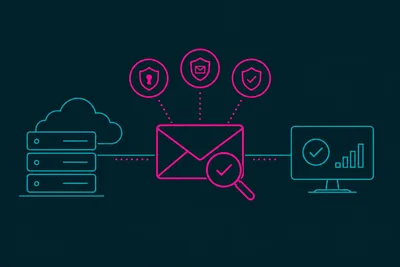
When you send email from a properly configured business domain, you can set up authentication records — SPF, DKIM, and DMARC — that tell receiving mail servers your messages are legitimate. These aren't optional extras. They're the reason your emails land in inboxes instead of spam folders.
Free email accounts give you no control over this. You're sharing infrastructure with millions of other users, some of whom are sending spam. Your domain's sending reputation is intertwined with everyone else on that platform. When you need reliable delivery for quotes, invoices, or time-sensitive proposals, that's a serious problem.
One missed proposal because it went to a client's spam folder can cost more than years of proper email hosting would have.
What Business Email Hosting Means for Your Data Security
Free email services are free for a reason. You're not paying with money — you're paying with data. Your conversations, your client details, your business intelligence: all of it lives on servers you have zero control over, governed by terms of service you probably haven't read.
Professional business email hosting gives you proper data governance. You know where your data lives. You understand the retention policies. You can export and back up everything. For companies handling sensitive client information, this isn't optional — it's the foundation of responsible operations.
There's also the question of account recovery. Free accounts can be locked, suspended, or hacked with little recourse. When your business communication runs through an account you don't truly own, you're one policy change away from losing access to years of correspondence.
The Operational Chaos That Builds Over Time
Early-stage companies often end up with email scattered across personal accounts, shared logins, and forwarding chains cobbled together over time. It works until it really doesn't.
Think about what happens when someone leaves the team. If their email was a personal Gmail account, those conversations leave with them. Client threads, supplier negotiations, ongoing project communications — gone. With proper business email hosting, you control the accounts. Departing employees can be offboarded cleanly, with mail redirected and archives preserved.
Managing a growing team is also much simpler with centralized email hosting. You can add accounts, set up shared inboxes for things like support@ or billing@, control access permissions, and enforce consistent signatures across everyone. None of that is easy to pull off with a collection of personal accounts.
How It Affects Your Domain Reputation — and Your Website's SEO
This one surprises people. Your email setup and your website's search performance are connected through your domain's overall reputation.
If your domain sends unauthenticated email, or worse, gets flagged for spam because of poor configuration, it damages how your domain is perceived across the internet — not just in inboxes. Search engines and security systems share signals. A domain with a poor email reputation is a domain under suspicion, and that has downstream effects on everything your company does online.
Proper business email hosting, set up correctly with authentication records, protects your domain's reputation. That reputation is a long-term asset for your company, and it covers your website, your marketing, and your communication all at once.
What "Proper" Business Email Hosting Actually Looks Like
At minimum, it means sending from your own domain with full DNS authentication records in place. Beyond that, good business email hosting includes:
- Reliable uptime with redundant servers — email is often more time-sensitive than your website
- Sufficient storage per mailbox, with clear limits you can plan around
- Admin controls to add, remove, and manage accounts centrally
- Strong spam filtering that keeps inboxes clean without being overly aggressive
- Backup and export options so your data is always recoverable
- Security features like two-factor authentication and encryption in transit
The price point for all of this is lower than most people expect — often just a few dollars per user per month. That's a tiny cost compared to what you're protecting.
The Real Calculation
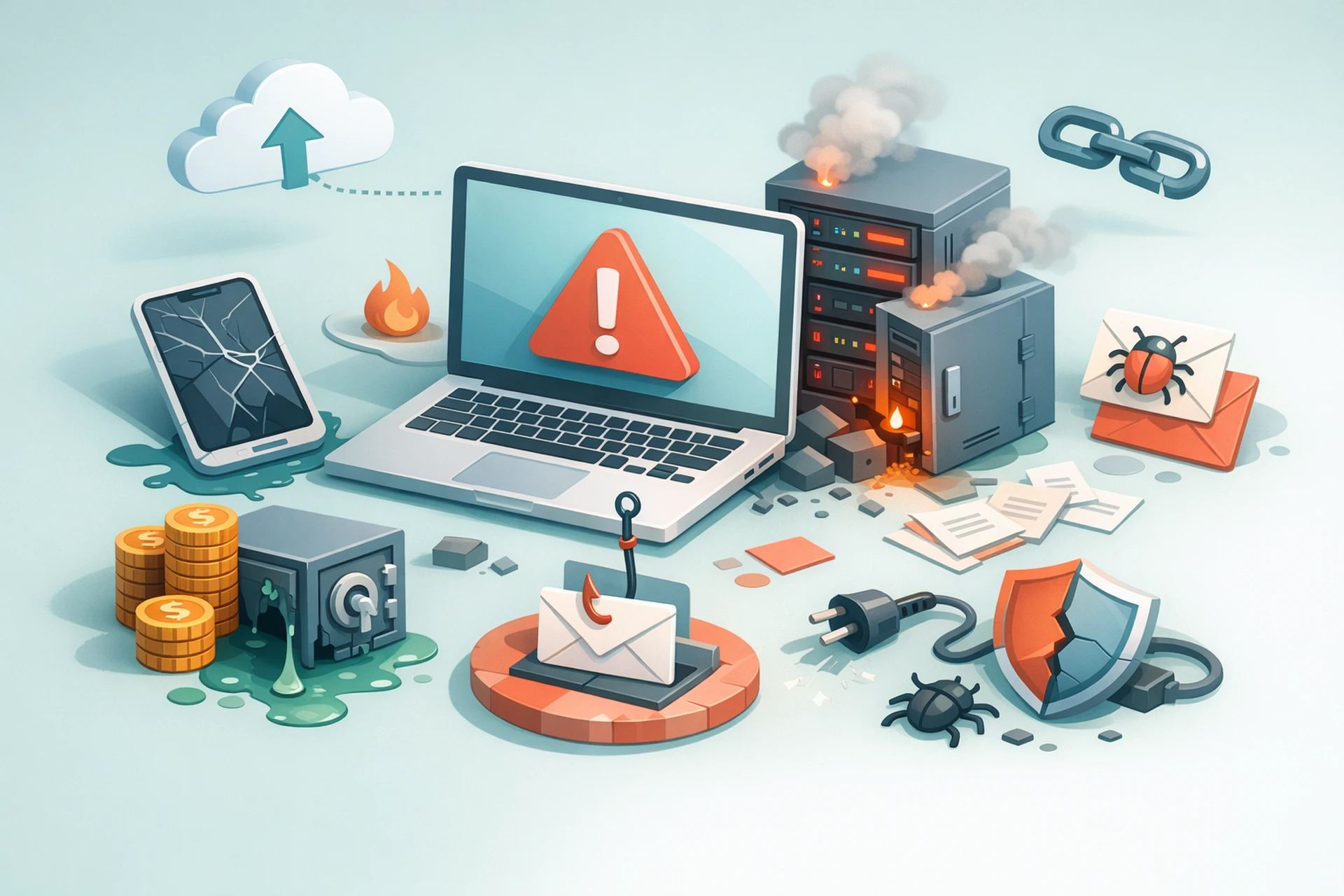
The companies that skip business email hosting usually do it to save money. But the actual math almost never works in their favor. One lost deal, one data incident, one operational mess when a team member leaves — any one of those events costs far more than years of proper email hosting ever would.
Email is how your business communicates. It's how deals get done, how clients get supported, how your team stays coordinated. Treating it as an afterthought is one of the more expensive mistakes a growing company can make.
Getting it right isn't complicated. Set up business email hosting on your domain, configure your authentication records properly, and give your team accounts they — and you — actually control. That's the foundation. Everything built on top of it becomes more reliable because of it. If you're also evaluating the broader infrastructure decisions around this, understanding why a custom domain email matters is a good place to start.